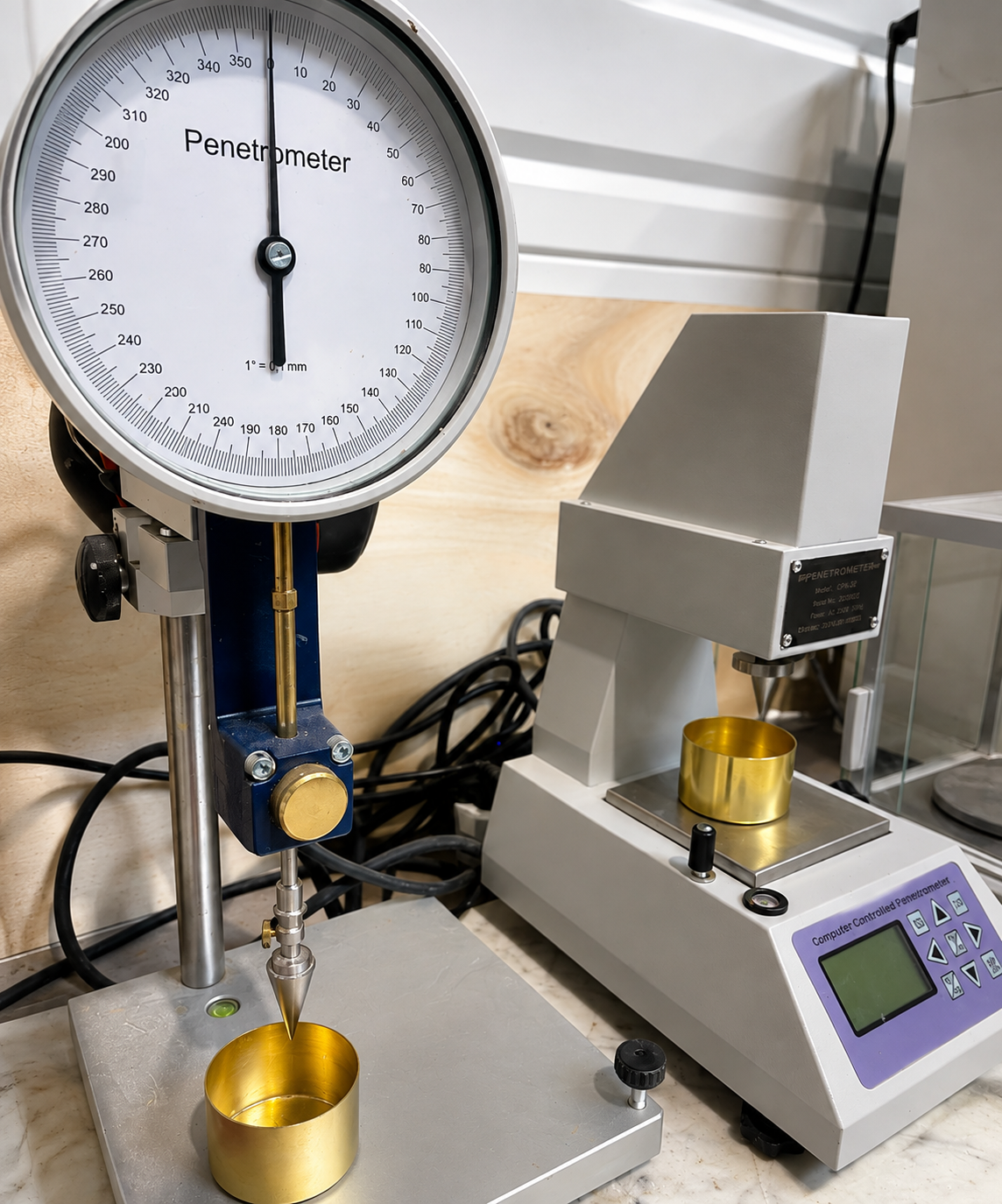
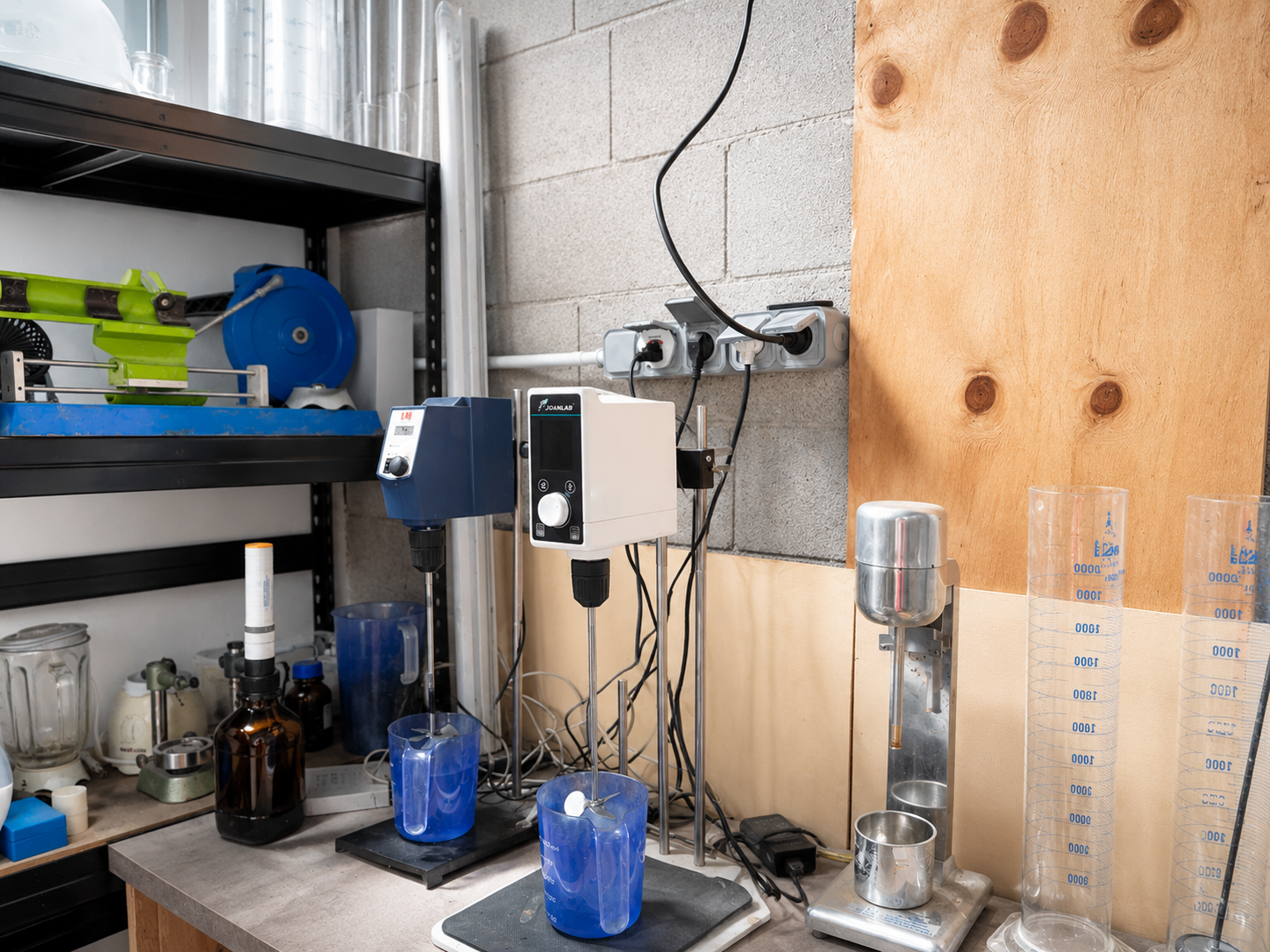
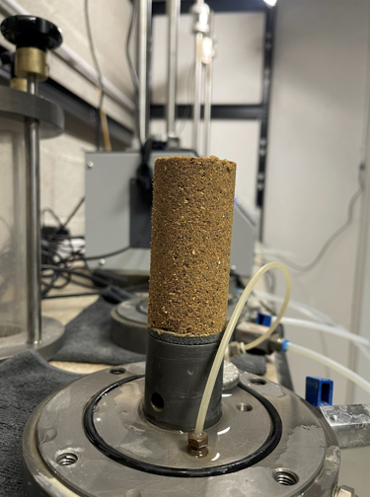
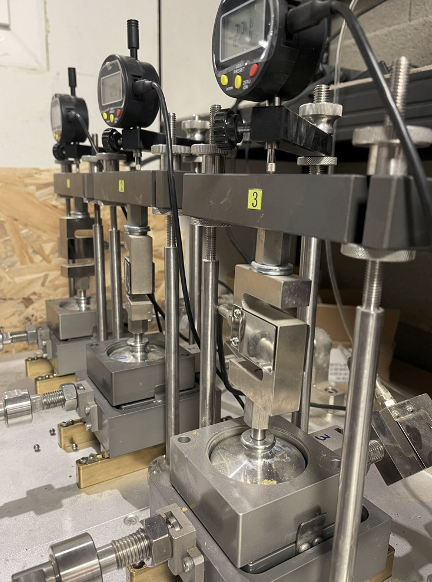
Because the feasibility of a project begins with a thorough understanding of the ground, INGELCIS LAB puts its expertise at the service of engineering firms, construction companies, public works contractors, industrial companies, and local authorities.
Our team, with more than 15 years of experience in geotechnical engineering, carries out all laboratory and on-site tests required for geotechnical studies and quality control.
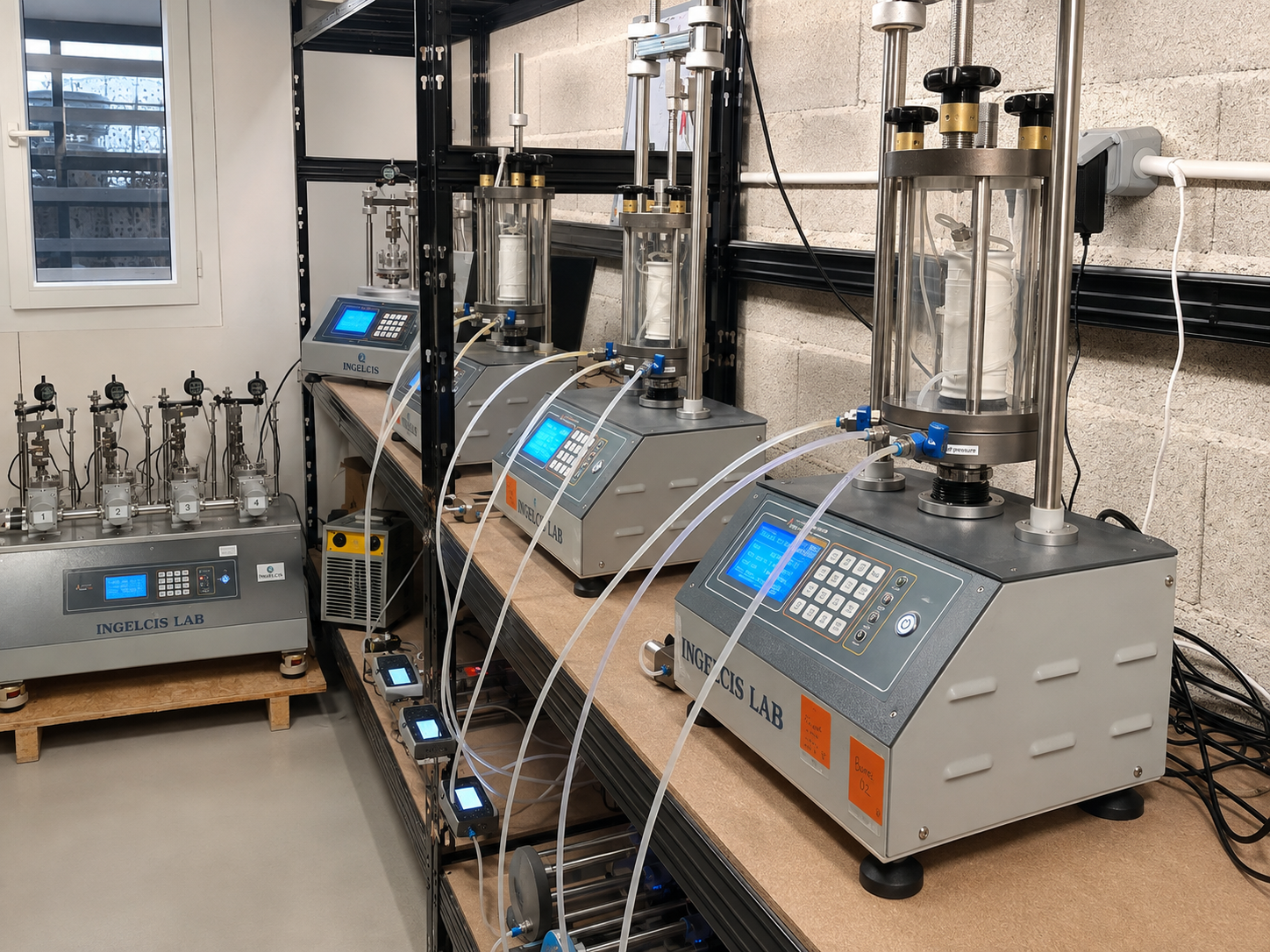
Our laboratory is equipped with modern, regularly maintained and calibrated equipment, enabling us to carry out accurate testing in accordance with current French and international standards. We continuously update our methods and equipment to ensure reliable, traceable, and up-to-date results that meet the latest technical and regulatory requirements.
Thanks to our expertise, responsiveness, and commitment to quality, INGELCIS LAB supports its clients at every stage of their projects by providing reliable technical data for the confident design, sizing, and quality control of structures.
SOIL AND AGGREGATE IDENTIFICATION TESTS:
The following tests are carried out by our technicians using suitable equipment:
NF EN ISO 17892-4
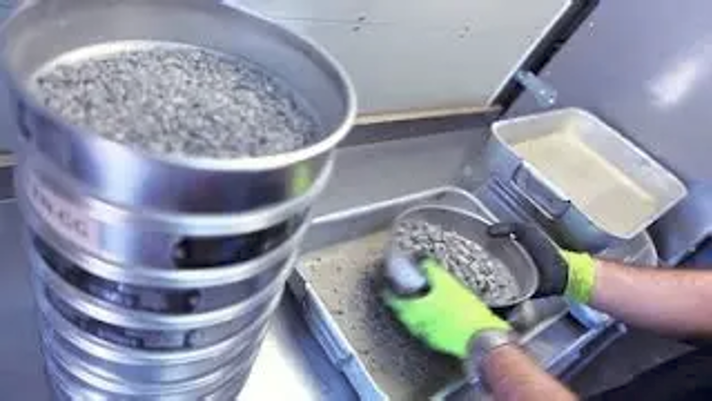
Granulométrie
Tamisage et sédimentation pour déterminer la répartition des grains et la courbe granulométrique.
ISO NF 17892-1
Teneur en eau
Mesure de référence par étuvage, indispensable à l’interprétation des autres essais.
NF EN ISO 17892-12
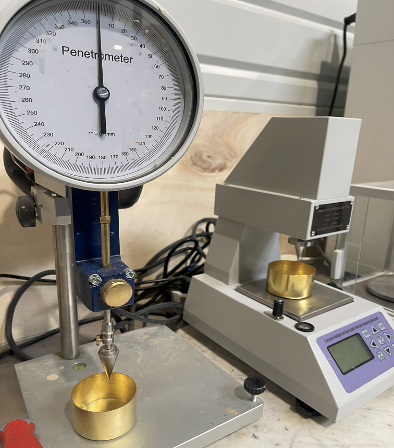
Limites d'Atterberg
Limites de liquidité et de plasticité pour caractériser les sols fins et leur sensibilité hydrique.
NF P 94-068
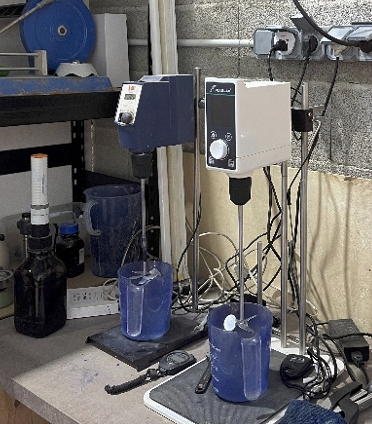
Valeur au bleu (VBS)
Évaluation des argiles actives et de la sensibilité des sols fins à l’eau.
NF P 94-093
Essai Proctor
Teneur en eau optimale et densité sèche maximale pour le contrôle du compactage.
Autres essais
Carbonates, Micro-Deval, ES…
CaCO₃, aptitude au traitement, Micro-Deval, équivalent de sable, aplatissement, et autres.
NF EN ISO 17892-4
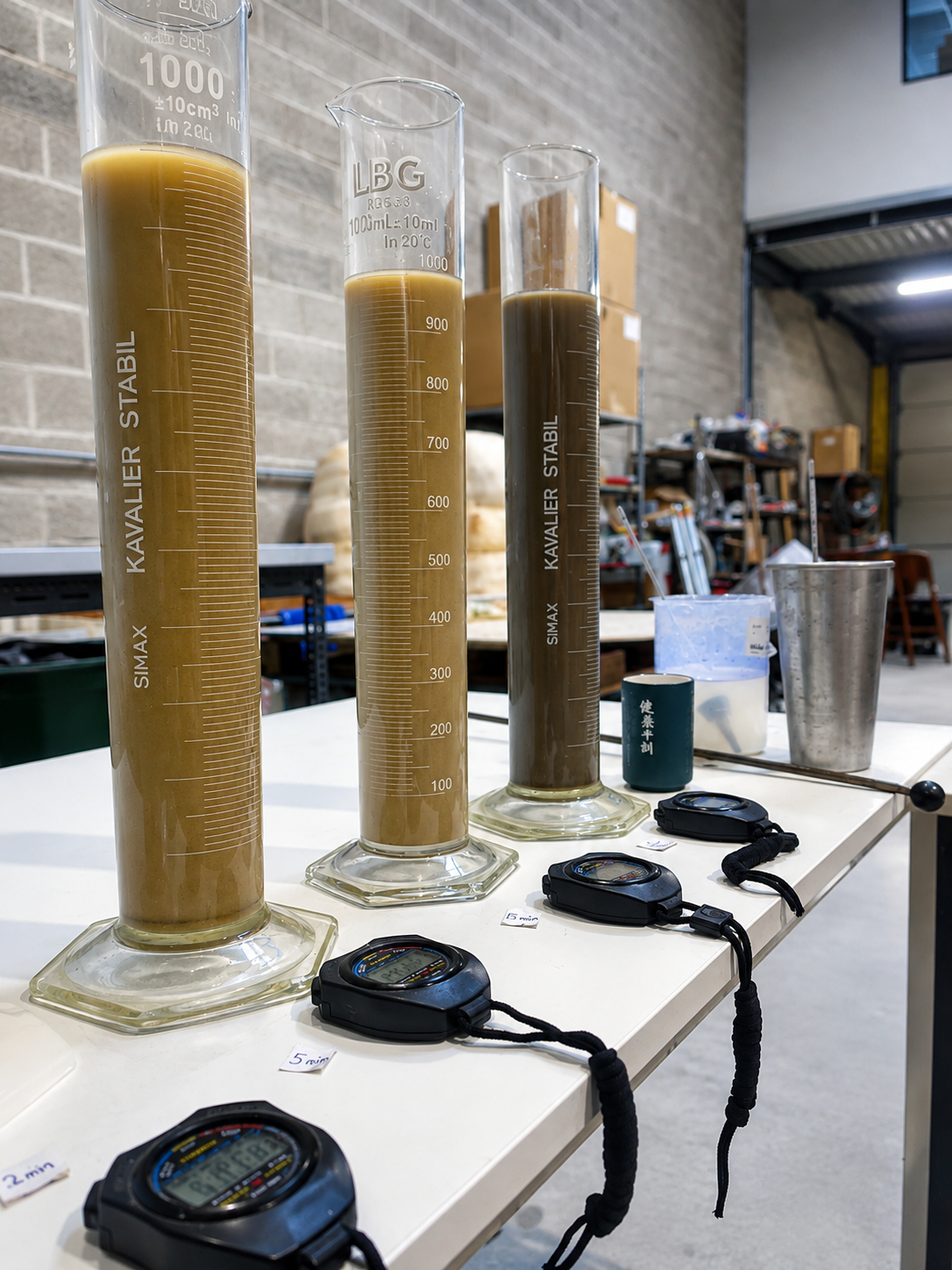
Granulométrie : par tamisage et par sédimentation
Cette analyse permet de déterminer la répartition des grains d’un sol, par tamisage pour les fractions grossières et par sédimentation pour les particules inférieures à 63 µm lorsque la teneur en fines est ≥ 10 %. Elle fournit la courbe granulométrique, essentielle pour la classification des sols et l’évaluation de leurs propriétés géotechniques
NF EN ISO 17892-12
Limites d'Atterberg
Cet essai permet de déterminer les limites de liquidité et de plasticité d’un sol fin, afin d’en caractériser le comportement en fonction de sa teneur en eau. Il est essentiel pour la classification géotechnique des sols cohésifs et l’évaluation de leur sensibilité aux variations hydriques.
NF P 94-068
Valeur au bleu de méthylène (VBS)
Cet essai permet d’évaluer la teneur en argiles actives d’un sol par adsorption de bleu de méthylène. La VBS constitue un indicateur de la sensibilité des sols fins à l’eau et est utilisée pour leur classification ainsi que pour l’appréciation de leur comportement géotechnique.
NF P 94-093
Essai Proctor Normal ou modifié
Réalisé sur 5 points de compactage, cet essai permet de déterminer la teneur en eau optimale et la densité sèche maximale d’un sol. Il constitue une référence essentielle pour le contrôle du compactage des remblais et des plates-formes, garantissant leurs performances mécaniques et leur stabilité.
NF EN ISO 17892-4
Particle Size Distribution: By Sieving and Sedimentation
This analysis determines the particle size distribution of a soil, using sieving for coarse fractions and sedimentation for particles smaller than 63 µm when the fines content is ≥ 10%. It provides the particle size distribution curve, which is essential for soil classification and the assessment of geotechnical properties.
NF EN ISO 17892-12
Atterberg Limits
This test determines the liquid and plastic limits of fine-grained soil in order to characterize its behavior according to its water content. It is essential for the geotechnical classification of cohesive soils and for assessing their sensitivity to moisture variations.
NF P 94-068
Methylene Blue Value (MBV)
This test evaluates the active clay content of a soil through methylene blue adsorption. The MBV is an indicator of the sensitivity of fine-grained soils to water and is used for their classification as well as for assessing their geotechnical behavior.
NF P 94-093
Standard or Modified Proctor Test
Performed using 5 compaction points, this test determines the optimum moisture content and maximum dry density of a soil. It is an essential reference for controlling the compaction of embankments and platforms, ensuring their mechanical performance and stability.
OTHER IDENTIFICATION TESTS
Moisture content by oven drying — ISO NF 17892-1
Carbonate content (CaCO₃) — NF P 94-048
Suitability of soil for treatment with lime and/or hydraulic binder (for 1 dosage: 1 Standard Proctor test on treated soil + 3 specimens) — NF P 94-99
Linear shrinkage limit — XP P 94-060-1 and 2
Determination of wear resistance — Micro-Deval — NF EN 1097-1
Assessment of fines — Sand Equivalent — NF EN 933-8
Determination of aggregate shape — Flakiness Index — NF EN 933-3
Determination of aggregate shape — Flakiness Index — NF EN 933-3
Determination of floating materials by volume and identification of constituents — NF EN 933-11
And others.
SOIL MECHANICS TESTS:
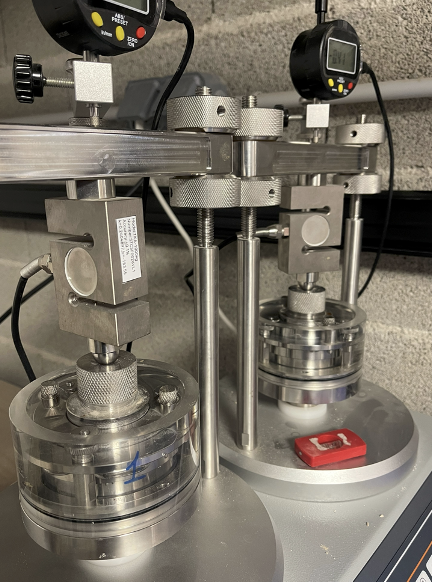
These tests determine the essential geotechnical parameters, particularly cohesion and the internal friction angle, which are required for analyzing the stability of slopes, foundations, and retaining structures.
NF P94-074
Essais triaxiaux (CD, CU+u, UU)
Caractéristiques mécaniques sous différentes conditions de drainage et de chargement.
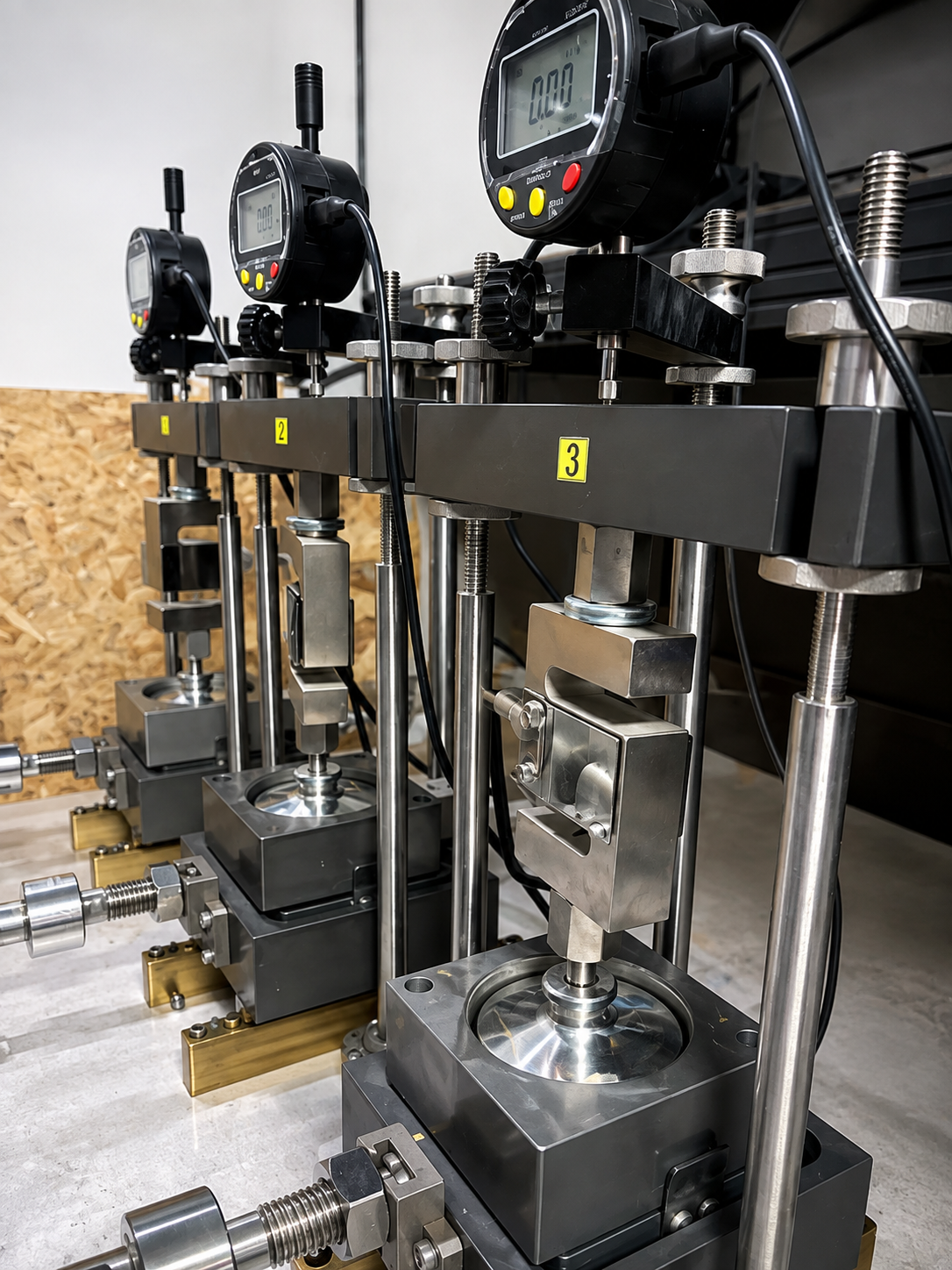
NF P 94-071-1
Cisaillement direct
Résistance au cisaillement sur 3 ou 4 éprouvettes (CD, CU, UU).
NF EN ISO 17892-5
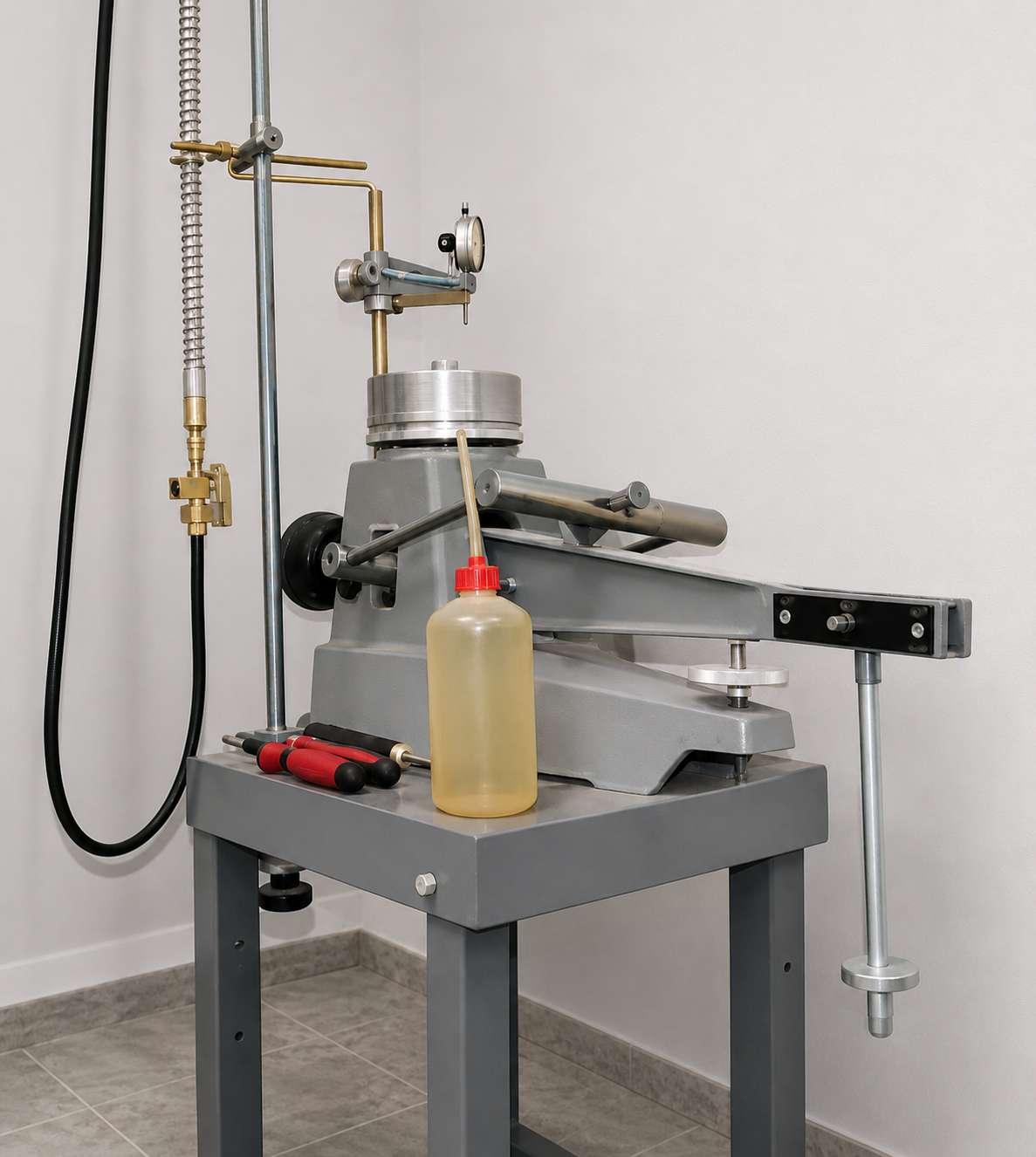
Essai œdométrique
Compressibilité et consolidation pour estimer les tassements.
XF P 94-091
Gonflement à l'œdomètre
Potentiel de gonflement des sols argileux sensibles au retrait-gonflement.
NF X30-442 / 443
Perméabilité triaxiale
Capacité du sol à laisser circuler l’eau sous contrainte représentative.
Œdomètre
Perméabilité à charge variable
Données pour drainage, étanchéité et comportement hydraulique.
NF P94-074
Triaxial Tests (CD, CU+u, UU)
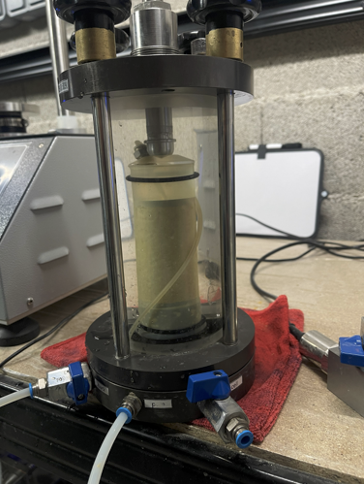
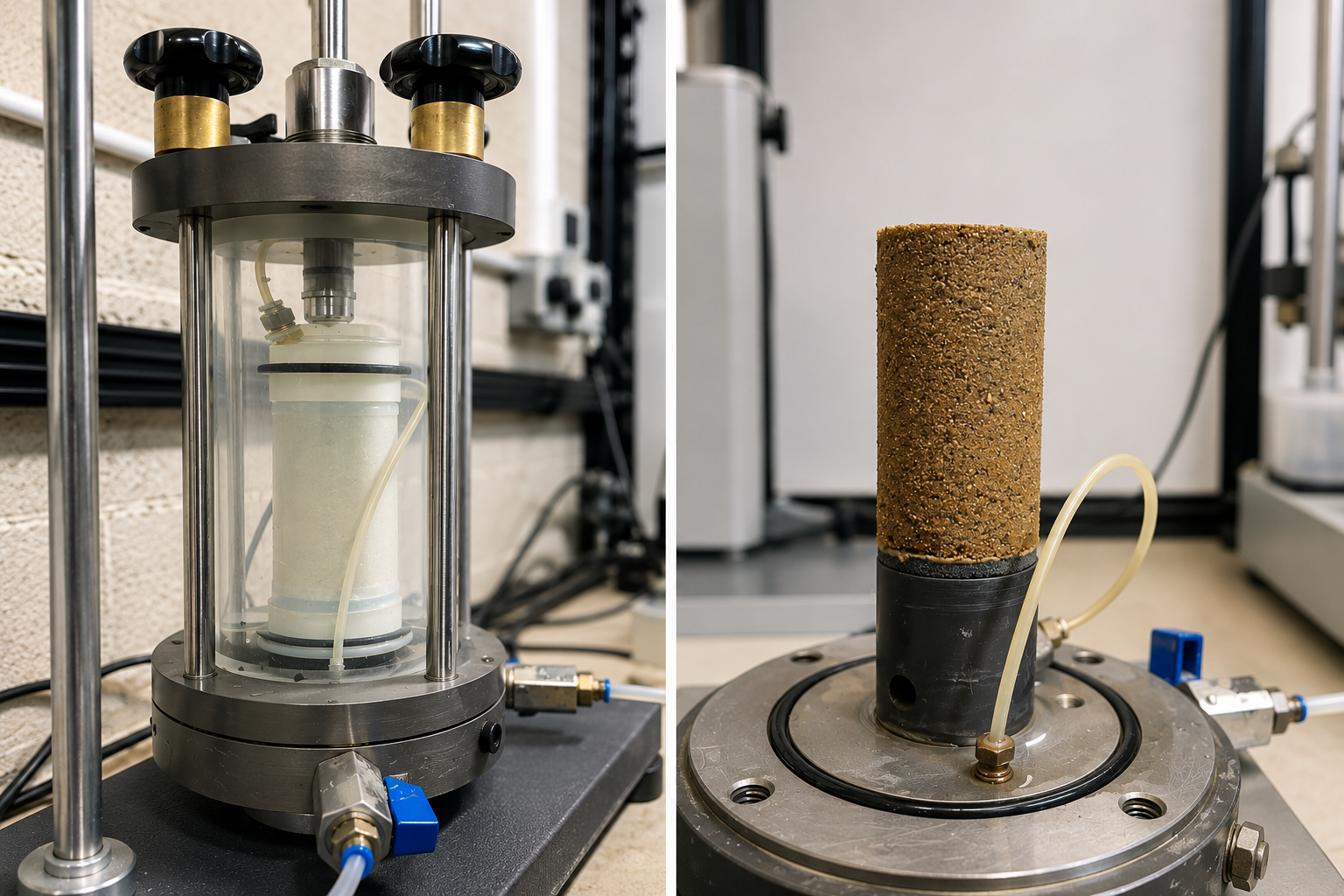
Triaxial tests allow the precise determination of soil mechanical properties under different drainage and loading conditions. They are used to evaluate shear strength, cohesion, and internal friction angle, which are essential parameters for the design of geotechnical structures and stability analysis.
NF X30-442 / X30- 443
Triaxial Cell Permeability Test (Under a Specified Stress Level)
This test determines soil permeability under a defined stress condition representative of actual field conditions. Performed in a triaxial cell, it evaluates the soil’s ability to allow water flow and provides essential data for drainage studies, waterproofing, and the hydraulic behavior of structures.
NF P 94-071-1
Direct Shear Test in Box (CD, CU): 3 or 4 Specimens
This test determines the shear strength of soils using 3 or 4 specimens subjected to different normal stresses.
Direct Shear Test in Box UU: 3 or 4 LCPC No. 21 Specimens
Performed on 3 or 4 specimens, this test determines the undrained shear strength of soils in their natural state. It is particularly used for the rapid assessment of short-term stability of structures and for the characterization of fine cohesive soils.
NF EN ISO 17892-5
Oedometer Test or Soil Compressibility Test: 1 Specimen
Performed on an undisturbed specimen, this test evaluates soil compressibility and consolidation characteristics under vertical loads. It provides the parameters required to estimate settlements of foundations, embankments, and other geotechnical structures.
Oedometer Swelling Test: 3 XF P 94-091 Specimens
Performed on 3 specimens, this test measures the swelling potential of soils due to variations in water content. It is particularly suitable for identifying clay soils sensitive to shrink-swell behavior and assessing risks for foundations and infrastructure.
Variable Head Oedometer Permeability Test (Under a Specified Stress Level)
Performed on a specimen subjected to a defined vertical stress, this test determines soil permeability and its ability to allow water flow. The results are used for studying water flow, drainage, and the hydraulic behavior of geotechnical structures.
ROCK TESTING
Rock testing includes all laboratory and sample-based tests performed to characterize the mechanical and physical properties of rock materials. These tests evaluate their strength, deformability, and behavior under failure or degradation conditions, in order to verify their suitability for use in earthworks, civil engineering projects, and construction materials.
NF P 94-420 / 425
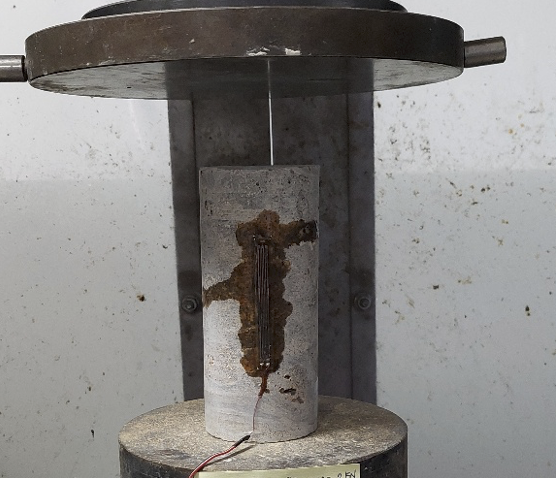
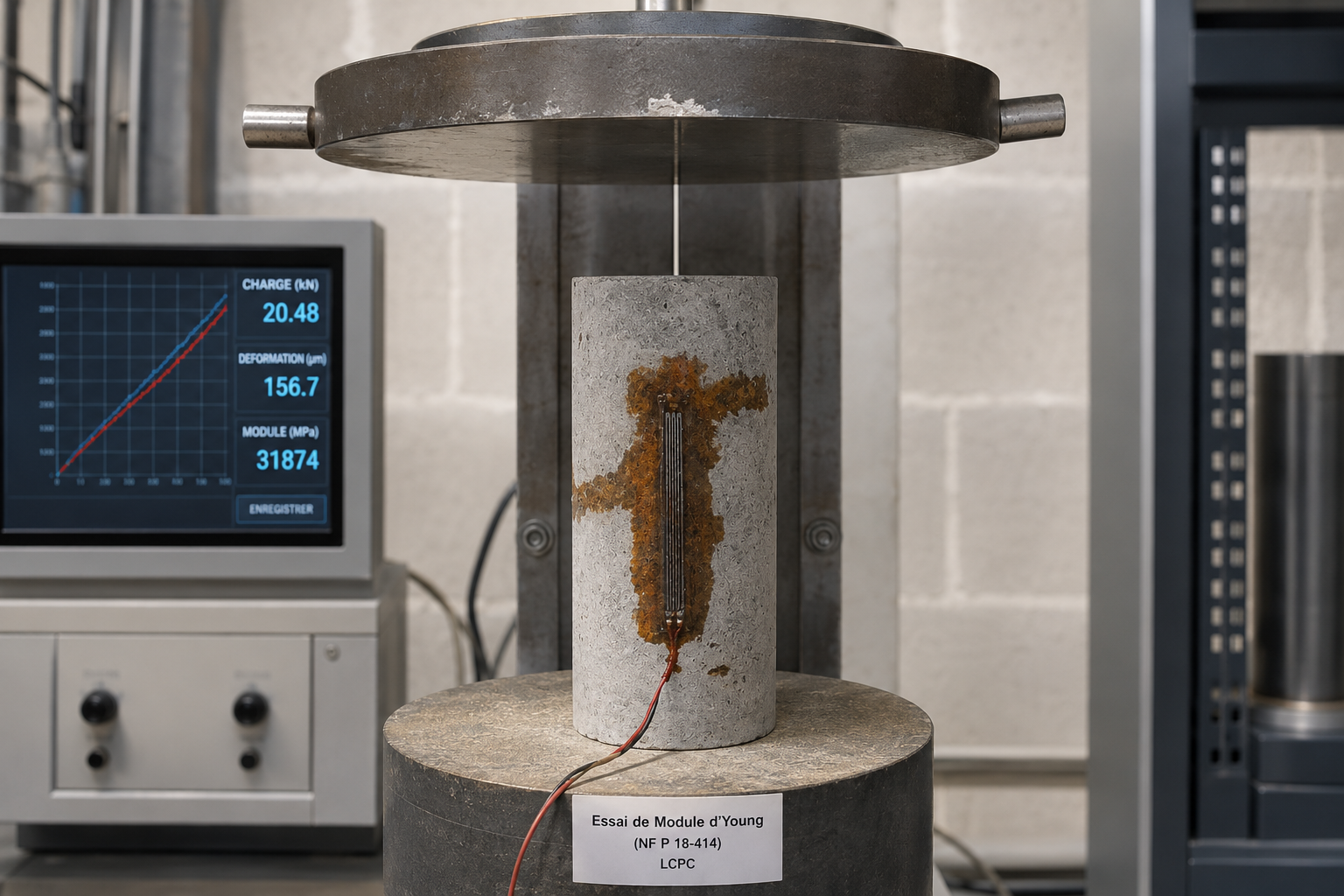
Compression uniaxiale (Rc)
Résistance mécanique, module de Young et coefficient de Poisson.
NF P 94-071-1
Essai brésilien
Résistance à la traction indirecte par compression diamétrale.
NF P 94-066
Fragmentabilité
Sensibilité à la fragmentation sous sollicitations mécaniques.
NF P 94-067
Dégradabilité
Comportement lors du compactage et aptitude en couches de forme.
NF P 94-425
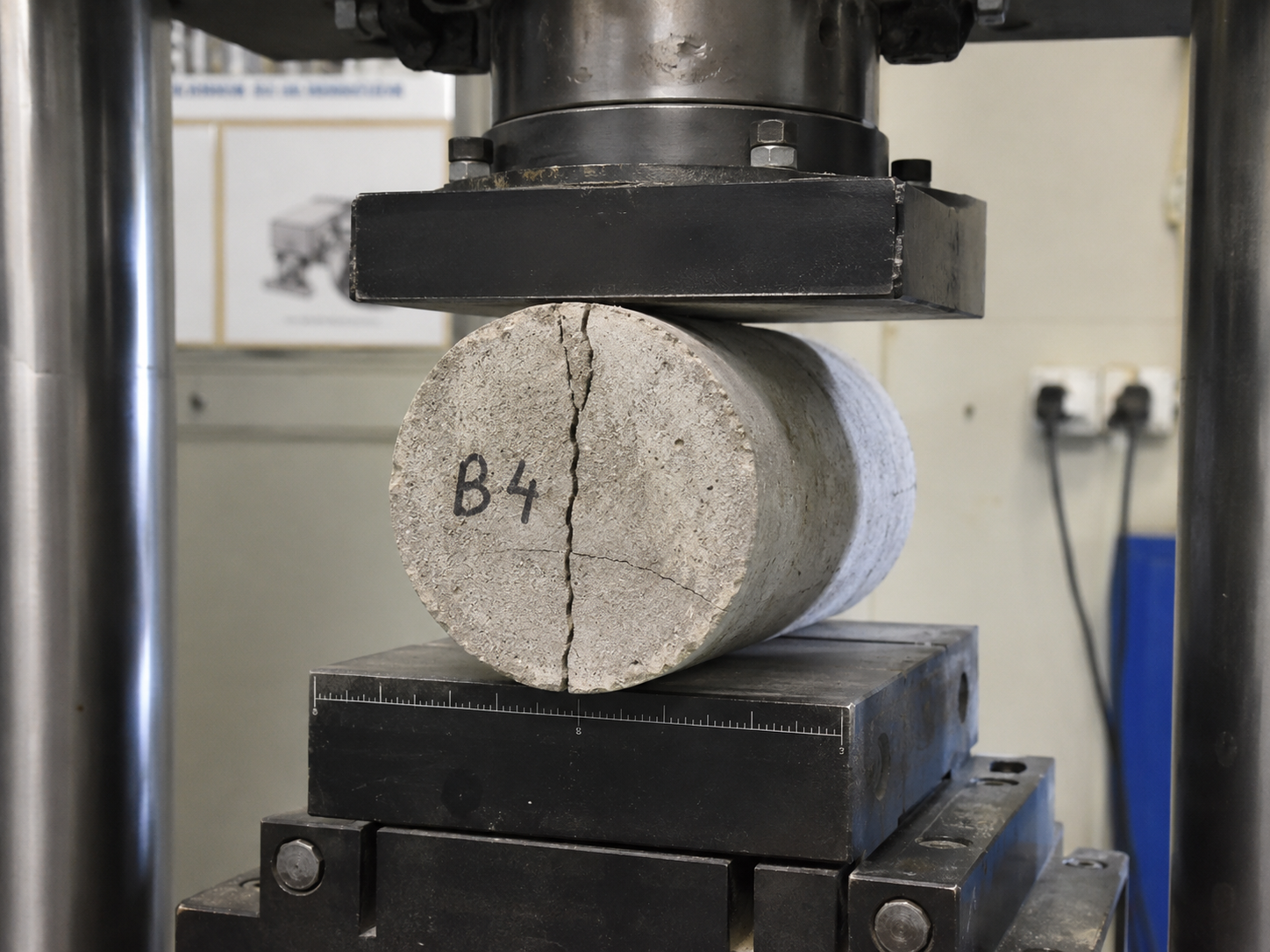
Uniaxial Compressive Strength Test (Rc) with Young’s Modulus and/or Poisson’s Ratio Measurement
This test determines the mechanical strength of a rock material or cohesive soil subjected to an axial load until failure. It also measures Young’s modulus and, when applicable, Poisson’s ratio, in order to characterize the elastic behavior and deformability of the material.
NF P 94-422
Tensile Strength Determination — Brazilian Test
This test evaluates the indirect tensile strength of rock or cohesive materials through diametral compression of a cylindrical specimen. It is commonly used to complete the mechanical characterization of materials and better understand their failure behavior.
NF P 94-066
Fragmentability Coefficient of Rock Materials
This test evaluates the sensitivity of rock materials to fragmentation under mechanical stresses. It provides an indicator of material degradability during handling and compaction, which is useful for sizing and selecting materials for earthworks.
NF P 94-067
Degradability Coefficient of Rock Materials
This test evaluates the sensitivity of rock materials to degradation under mechanical stresses and construction cycles. It provides an indicator of their behavior during compaction and their suitability for use in earthworks and subgrade layers.
SITE TESTING
Earthwork bearing capacity control includes in-situ tests carried out on construction sites to verify soil compaction quality and bearing capacity. These tests allow rapid evaluation of deformation modulus and material strength (plate load test, dynamic plate test, penetrometer test, and deflection testing) in order to validate the compliance of embankments and platforms and reduce settlement risks.
NF P 94-117-1
Plate Load Test — LCPC Procedure
This test determines soil deformation modulus values (k, EV1, and EV2) through loading cycles performed on a rigid plate. Conducted according to NF P 94-117-1 and the LCPC procedure, it is used to assess bearing capacity and compaction quality of supporting soils, platforms, and embankments.
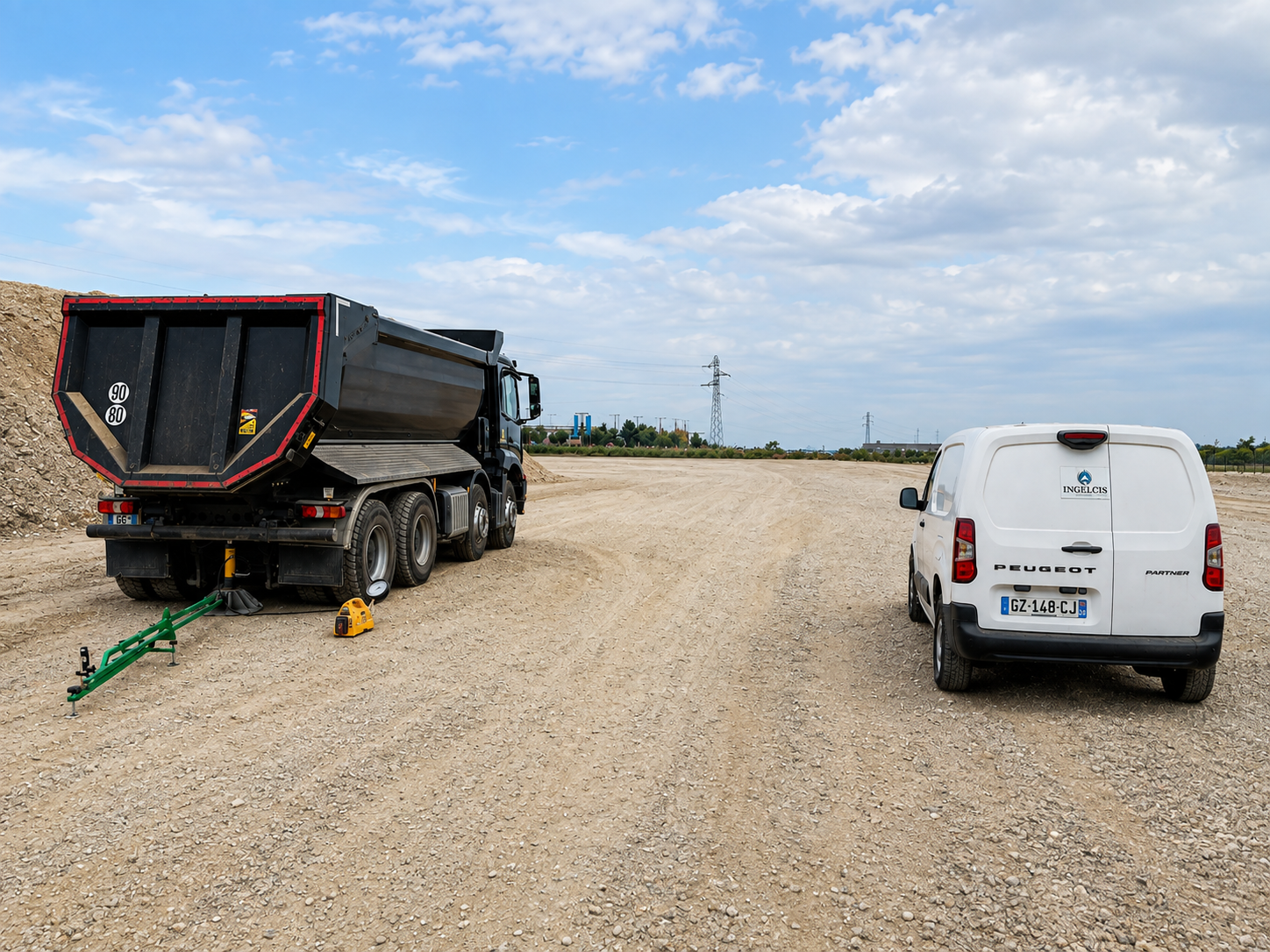
Benkelman Beam Deflection Test — LCPC Methods
This test measures the vertical deformation of a pavement or platform under an applied load. It is used to assess the bearing capacity and mechanical behavior of road structures, as well as to diagnose their condition.
NF P 94-117-2
Light Dynamic Plate Test (PDL) — Mini Dynamic Plate
This test provides rapid control of the compaction quality of subgrade soils and construction platforms. It determines the dynamic deformation modulus Evd (MPa) based on the penetration measured under a dynamic load applied by a plate.
NF P 94-105
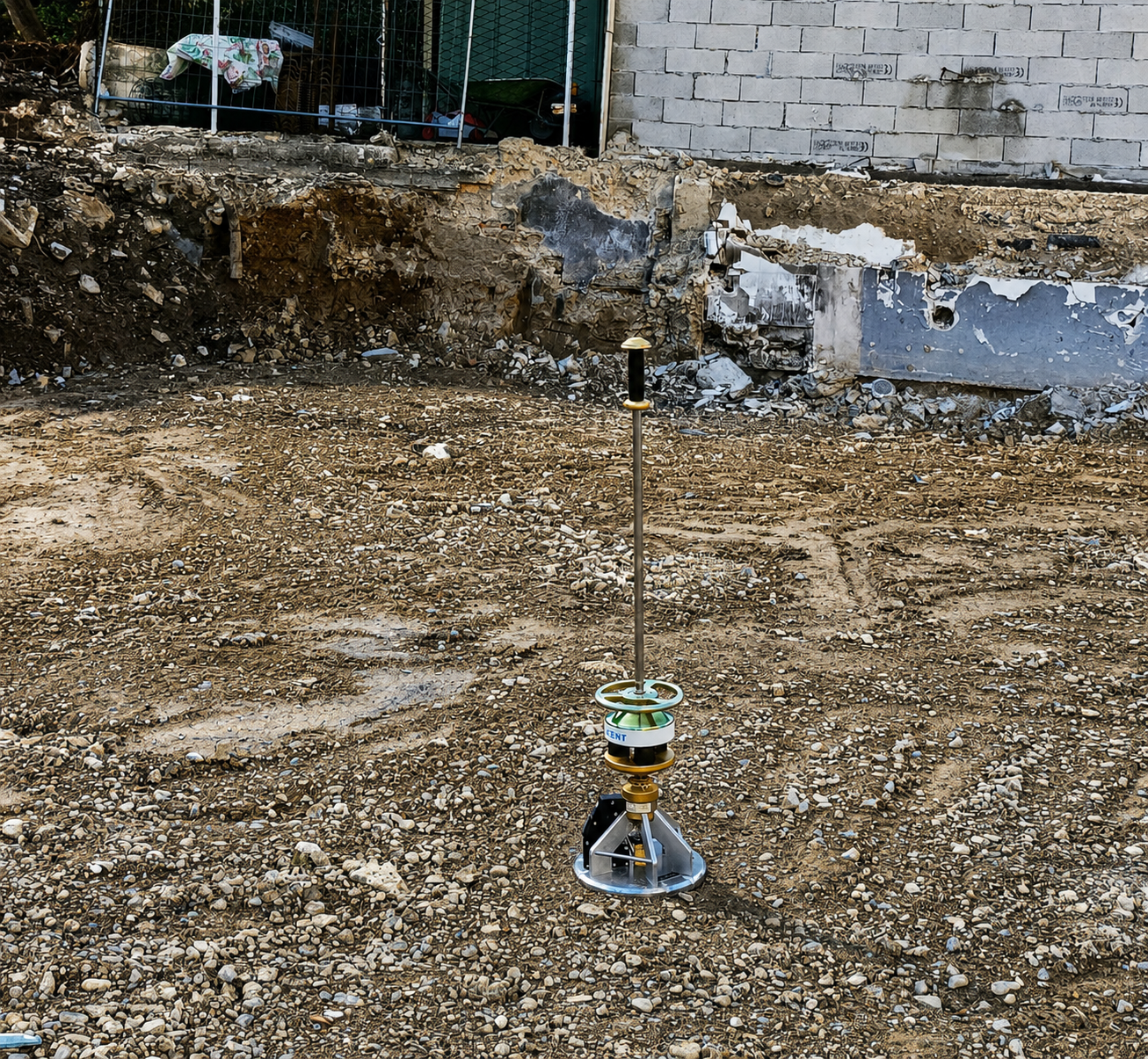
Light Dynamic Penetrometer Test — Panda Type
This test evaluates the density and strength of in-situ soils through the dynamic penetration of a conical tip. It provides a continuous soil resistance profile according to depth, used for controlling earthwork layers and identifying variations in bearing capacity.
Our Process
From Sample to Report
Each sample follows a clear and rigorous process, from reception through to the interpretation of results.
1
Reception & Preparation
Each sample is registered, identified, and prepared according to the type of tests to be performed.
2
Identification Tests
Particle size distribution, moisture content, Atterberg limits, and methylene blue value tests are performed to identify and classify soils.
3
Specialized Tests
Soil mechanical tests, rock tests, and site quality controls are carried out to evaluate the behavior and performance of materials.
4
Analysis & Report
Results are interpreted and compiled into a clear, practical report for engineering studies and technical decision-making.
Particle size distribution, moisture content, Atterberg limits, methylene blue value, and Proctor tests to accurately identify and classify soils and aggregates.
Triaxial tests, direct shear tests, oedometer tests, swelling tests, and permeability tests to determine soil strength, compressibility, and hydraulic behavior.
Uniaxial compression tests, Brazilian tests, fragmentability, and degradability tests to characterize the mechanical and physical properties of rock materials.
Plate load tests, Benkelman beam deflection tests, light dynamic plate tests, and Panda penetrometer tests to control bearing capacity and compaction quality on site.